Your website may look good, but if it’s not converting, it’s quietly costing you money every day nothing is changed. Most business owners assume low performance means they need more traffic, when in reality the problem is usually hidden conversion friction.
A proper website conversion audit reveals exactly where trust breaks, conversions stall, and revenue leaks before visitors ever call or book.
This guide breaks down the same conversion rate optimization audit framework used to diagnose underperforming websites and turn them into consistent lead generators.
What Is a Website Conversion Audit?
A website conversion audit is a structured review of how effectively your website turns visitors into leads, calls, or sales. Unlike surface-level design feedback, a conversion optimization audit evaluates real user behavior, trust signals, clarity, and post-conversion handling.
A strong CRO audit checklist looks beyond aesthetics and answers one question: Is this website designed to convert or designed to confuse?
This matters because there are only two ways to get more leads online:
- Get more traffic
- Convert more of the traffic you already have
Most businesses default to option one because it feels intuitive. If you want more leads, you drive more visitors. The problem is that traffic is expensive, slow to scale, and often outside your immediate control.
Why Conversion Optimization Beats Chasing More Traffic
Let’s break this down with simple math.
If your website converts 2 out of every 100 visitors into leads, that’s a 2% conversion rate. To generate 10 leads, you would need roughly 500 visitors.
Now you have two options.
Option one is to go get 400+ additional visitors. That usually means more ad spend, more SEO work, more content, or more time waiting for rankings to improve. All of that costs money, time, or both.
Option two is to improve the system that turns visitors into leads.
If you increase your conversion rate from 2% to 5%, those same 100 visitors now produce 5 leads instead of 2. At that point, you only need 200 total visitors to reach 10 leads, not 500.
Nothing about your traffic changed. Nothing about your ad budget changed. Only the efficiency of your website improved.
That is the leverage a website conversion audit creates.
Instead of fighting uphill for more attention, you make better use of the attention you already earn. Small conversion improvements compound quickly, especially when paired with ongoing conversion rate optimization testing.
The Four Pillars of a Conversion Rate Optimization Audit
Every effective conversion rate optimisation audit evaluates four core areas that work together as a system.
Trust
Trust determines whether a visitor stays or leaves before taking any action. Elements like speed, real photos, reviews, and up-to-date content reduce perceived risk and hesitation. Without trust, even high-intent traffic will not convert.
Conversion Design
Conversion design controls how easily a visitor can take the next step. Clear messaging, visible calls to action, and simple page structure remove friction at the moment of decision. If someone wants to contact you but can’t do it instantly, the conversion is lost.
SEO Visibility
SEO visibility ensures your website can be found by people actively searching for your services. Without consistent, qualified traffic, conversion optimization has limited impact. This pillar exists to feed the system with enough data to make meaningful improvements.
Lead Handling and Automation
Lead handling determines whether conversions turn into actual revenue. Fast responses, automated follow-up, and organized lead management prevent prospects from going cold. A website that converts but fails to follow up is still leaking money.
Trust Audit: Does Your Website Instantly Feel Legit?
1. Mobile Load Speed and Performance
Over 60% of website traffic now comes from mobile devices, and that number continues to grow. If your site loads slowly or displays incorrectly on a phone, most visitors will leave before reading a single word.
According to Google, 53% of mobile users abandon a site if it takes longer than 3 seconds to load.
This makes mobile performance one of the most critical checks in any cro audit checklist.
2. Real Photos vs Stock Photos
Generic stock images reduce credibility. Visitors can instantly recognize photos that feel staged or artificial.
Studies from Nielsen Norman Group show that authentic imagery increases trust and perceived transparency, especially for service-based businesses. Real photos of your team and work reinforce legitimacy even if they are imperfect.
In a website conversion audit, every image should support the surrounding message or be removed.
3. Visible Testimonials and Social Proof
Trust must be established immediately. Reviews buried at the bottom of a page rarely influence decisions.
BrightLocal reports that 88% of consumers trust online reviews as much as personal recommendations.
High-performing cro audits always recommend placing testimonials within the first three sections of a page, not hidden below the fold.

4. Website Update Recency
Outdated content damages credibility. Pages referencing old years, expired offers, or irrelevant messaging signal neglect.
HubSpot research shows that regularly updated content improves engagement and conversion rates, especially for service businesses operating in competitive markets.
A conversion optimisation audit always checks whether content reflects the current year, services, and customer expectations.
Conversion Design Audit: Can Visitors Take Action Instantly?
5. Clarity of Messaging in the Hero Section
Within five seconds, visitors must know:
- What you do
- Who you serve
- What to do next
If the hero section fails to communicate this clearly, conversion rates drop sharply. If the visitor doesn't know that they clicked on the right website, they’ll leave.
If the visitor can’t tell that the website is speaking to them, they have no incentive to stay and find value.
If a visitor recognizes that they are on the correct website and the website content engages them, but they cannot locate your contact information, they will not search for it. The visitor conversion rate decreases when visitors need to complete multiple steps during their journey.

6. Prominent Calls to Action
If someone wants to contact you, they should never have to search for how.
Baymard Institute usability research shows that clear, visible calls to action significantly increase form submissions and engagement, especially on mobile.
A cro audit checklist requires:
- One CTA above the fold
- One mid-page CTA
- One bottom CTA
7. CTA Repetition and Objection Handling
High-converting websites function like expert salespeople: they clearly request the desired action, address potential objections using proof and clarity, and then reinforce the call to action.
Strategic repetition of Calls to Action (CTAs) is crucial because it significantly improves conversion rates by minimizing friction and decision fatigue for the user.
A core component of any conversion rate audit is evaluating the placement of CTAs, ensuring they logically follow trust-building elements such as testimonials or portfolio case studies.
8. Customer-Centric Messaging
The most common mistake in online content is self-centered messaging ("We are the leading provider..."). This kills conversions.
The truth is: Visitors don't care how great your business is; they care how you solve their problem.
Your audience arrives with a pain point and wants to know: Can this company help me? Leading with company history or accolades forces the visitor to connect your greatness to their problem, which most won't do.
| Low-Converting (Company-Centric) | High-Converting (Customer-Focused) |
| "We offer state-of-the-art storage." | "Never lose a file. Access data securely from anywhere." |
| "Our team has 20 years of experience." | "Stop wasting hours on data entry. Automate your process, saving you 10 hours a week." |
| "We are the market-leading firm." | "Are sales flat? Get the actionable growth strategy to hit your Q3 targets." |
To shift your focus, ask:
- What is the core problem the customer is solving?
- How can we state that problem in their language?
- What is their immediate, measurable benefit?
- Do we use "you/your" more than "we/our/us"?
Auditing your messaging this way validates the visitor's concern, positions you as the solution, and reduces friction for the next step, fixing hidden revenue leaks.
9. Skimmable Content Structure
Long, dense paragraphs discourage online readers, who fundamentally scan before they read. The Nielsen Norman Group's eye-tracking research confirms that users read only 20–28% of a web page.
To optimize content for scannability and ensure vital information is seen, prioritize structure:
- Headings and Subheadings: Essential navigational anchors that break up text and allow users to jump to relevant sections.
- Bullet Points and Numbered Lists: Information presented in lists is far more likely to be read than content buried in paragraphs, offering clarity and a higher signal-to-noise ratio for key facts.
Using headings and lists increases the chance users will absorb the most important information, counteracting the natural tendency to skip large text blocks.
10. Easy Contact Access on Every Page
Every website page must immediately guide the visitor to the next logical step, a core principle of Conversion Rate Optimization (CRO).
The Call-to-Action (CTA) must be obvious, contextually relevant, and require minimal thought. Visitors should easily be able to:
- Get in touch: Use prominent CTAs like "Contact Us" or "Get a Quote," often sticky and repeated.
- Learn more: Provide clear links to deeper content such as "View Case Studies" or "See Our Pricing."
- Convert directly: Ensure "Add to Cart" or concise lead forms are highly accessible.
Key Implementation: Use a consistent global "Contact" button, tailor CTAs to page context (e.g., "Get a Free SEO Audit" on an SEO page), make the primary CTA visually dominant with contrasting colors, and ensure mobile accessibility with sticky action bars.
SEO Audit: Can Your Website Be Found at All?
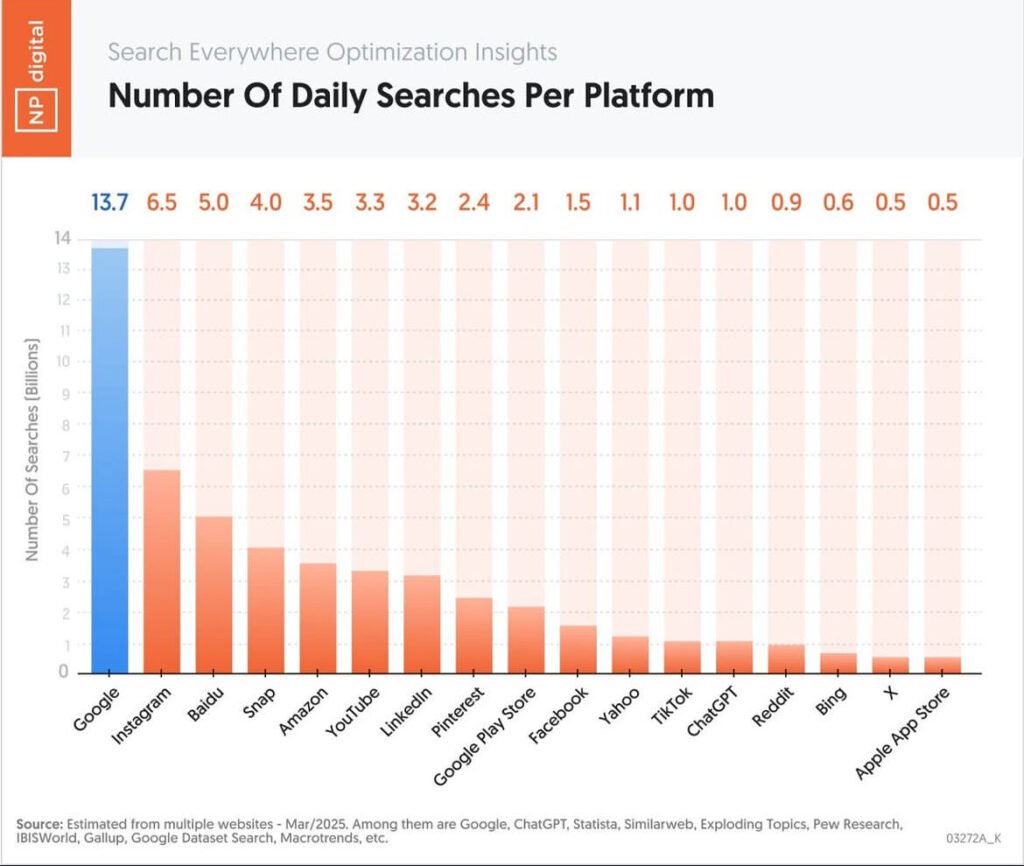
11. Search Visibility for Core Services
Conversion hinges on traffic. SEO is vital for driving the steady visitor flow—the "lifeblood"—that enables conversion.
An effective digital strategy must focus on two equally important fronts:
- Maximize Traffic: Use comprehensive SEO to attract the right audience.
- Maximize Conversion: Optimize the visitor experience to drive the desired action.
Only by mastering both traffic generation and conversion optimization can a business achieve true scalability and revenue growth.
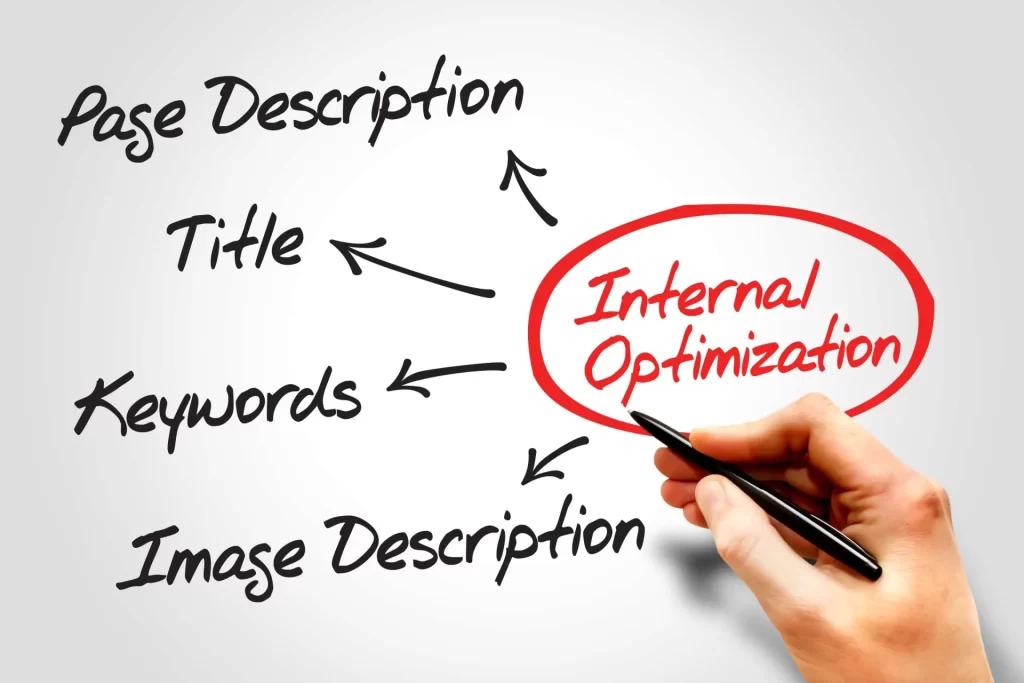
12. Optimized Titles and Meta Descriptions
Titles and meta descriptions influence click-through rate, which directly affects conversion volume.
To optimize for higher conversion:
- Clarity & Value: State the benefit the user gains by clicking (the value proposition).
- Keywords: Strategically integrate keywords to signal relevance to both search engines and users.
- Compelling CTA: Use the meta description as an advertisement with a persuasive, action-oriented call-to-action.
- Triggers: Employ emotional and urgency words to stand out.
- Character Limits: Adhere to limits to prevent truncation and maintain message integrity.
Lead Handling and Automation Audit: What Happens After Conversion?
13. Immediate Post-Submission Response
Leads decay fast because intent fades quickly. When someone submits a form, they are actively comparing options, not waiting patiently for a reply.
Harvard Business Review found that businesses responding within five minutes are 21x more likely to qualify a lead, while slow responses often result in the prospect moving on to a competitor.
This is why a website conversion audit must evaluate response speed, not just form design. A conversion only matters if it is acknowledged immediately.

14. Conversion Rate Tracking and Testing
You cannot improve what you do not measure. Without tracking conversion rates, businesses are forced to rely on assumptions instead of evidence, which leads to random changes and inconsistent results.
Proper tracking turns optimization into a repeatable process rather than a guessing game.
CRO case studies consistently show that small conversion lifts compound over time when changes are tested systematically. This is where conversion rate optimization testing becomes powerful, allowing businesses to validate what works before scaling it.
15. CRM Organization and Lead Nurturing
Most leads are not ready to buy the moment they convert. Without a CRM to organize and follow up with those leads, they are effectively wasted.
A conversion audit looks beyond the initial lead and evaluates whether contacts are being stored, tracked, and re-engaged over time. Long-term growth comes from nurturing the 97%, not just chasing the 3% ready to buy.
The Most Important CRO Audit Question (Bonus)
Would you personally fill out the form or call the number if you were a stranger?
Conversion decisions are emotional. Research from the Journal of Consumer Psychology confirms that emotion plays a dominant role in purchasing decisions, even in B2B and service industries.
If the answer is no, technical fixes won’t matter until trust and emotional alignment are addressed.
Conclusion: Why Conversion Audits Outperform Traffic Growth
Most businesses don’t need more visitors.
They need fewer leaks.
A structured website conversion audit identifies exactly where trust breaks, friction appears, and opportunity is lost. When paired with consistent conversion optimization testing, small improvements compound into meaningful revenue growth.
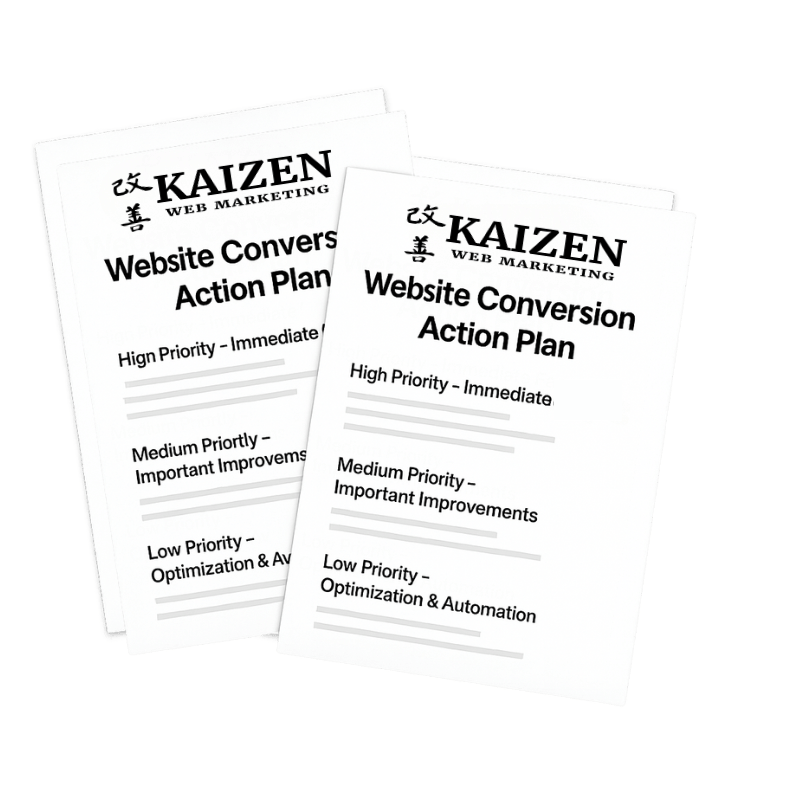
If you want to see where your website is leaking conversions, start with our structured conversion rate optimization audit instead of guessing. If you want us to implement and audit your website, contact us.
Even small fixes identified through a proper cro audit checklist can unlock significant gains over time.
Continuous improvement beats constant reinvention.